Issues with Glyoxal

February 24, 2014

thefurioustenderness asked: Hello, I have a couple of questions about glyoxal. First, does the diluted glyoxal solution that you use for hardening need to be thrown away after each use, or can it be kept and reused? If it needs to be thrown out, is there a special way to discard it or is it ok to pour down the drain? Second, I have read reports of glyoxal causing yellowing of the paper. Has this been an issue for you? Thank you for your time!

I tend to mix up new glyoxal solution each time I harden although I believe my students have reused the same solution over the course of a few weeks before discarding–I pour the used glyoxal solution down the drain where I teach. There is a neutralizing tank built into our liquid waste system that treats all the chemicals we discard (except for Fixer-we have a separate liquid waste disposal service for the Fixer).  I’ve been using glyoxal for over ten years and have not experienced it yellowing the paper.  Formaldehyde was used when I first learned gum printing in the 80’s but recently the FDA determined it to be a carcinogen and has since banned the use of the chemical.  Hope this helps.  Tony

Flipping the negative

December 31, 2013

nonetodate asked: In looking at your gum prints and process it looks like you don’t flip your digital neg over so that the ink side of the neg is against your pigmented gum coated paper . It appears you expose through the ink side of the digital neg. Why?

No reason, I’ve always printed through the ink side of my negatives.  I find the Epson inks are durable enough to withstand scratching.  

Problems with sizing

June 6, 2013

pmutti-blog asked: I am having problems with all my prints developing a crackled surface, but the paint doesn’t flake off. I am using Rives BFK paper and Gamblin PVA for sizing. Do you know what is causing this problem? When you use gelatin for sizing do you have to use any additional hardening agents? I would appreciate any ideas to solve the problem. Thank you, pmutti

It sounds like a sizing issue which what may be causing the staining you’re having.  After sizing with Knox Gelatin I will harden the gelatin using Glyoxal.  I haven’t used the Gamblin PVA for sizing.  Christopher James combines the Glyoxal with his gelatin to size and harden in one step.  You can check out my post on sizing for more detailed information on my process.  Hope this helps.  Tony

https://wordpress.com/block-editor/post/thegumbichromatejournal.com/84

Exposure Unit

May 28, 2013

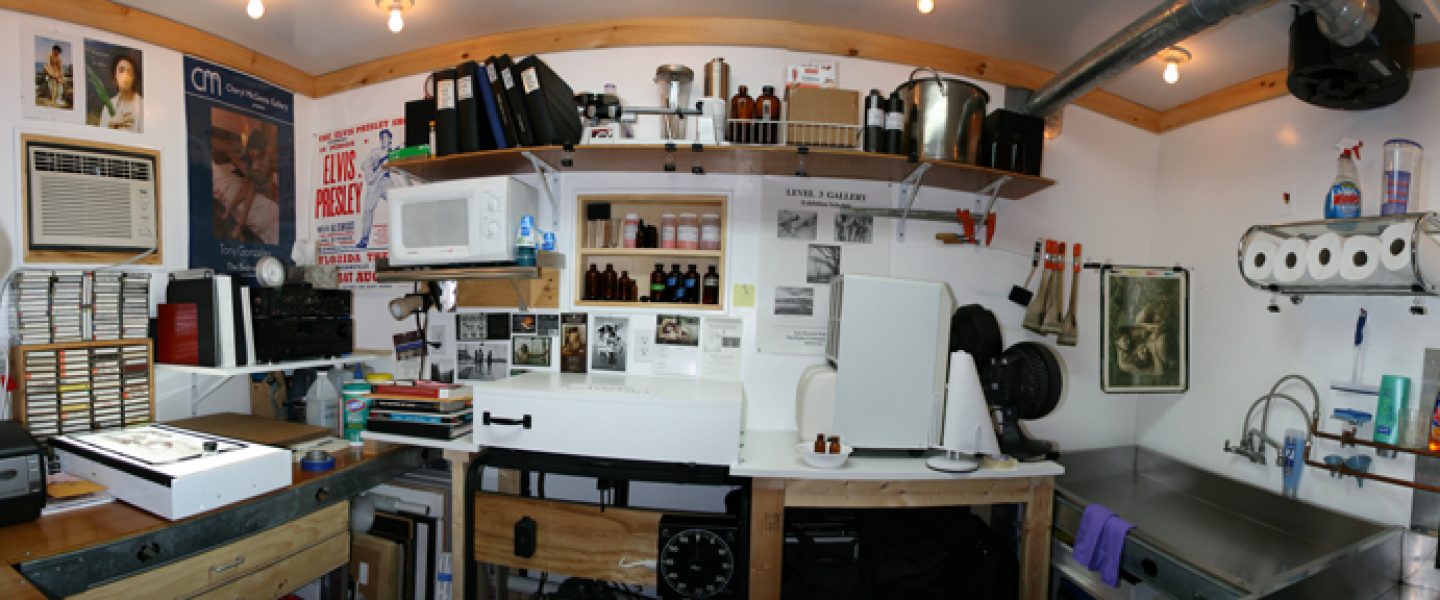
pleasekillmenowforiamworthless asked: Did you build your own UV exposure box? I am planning on doing some gum printing at home and your setup looks quite reasonable. Do you know where I can get schematics for building one?

I don’t have schematics for building an exposure unit but I built my exposure unit box by using white Melamine shelves from Home Depot: http://www.homedepot.com/buy/3-4-in-x-15-3-4-in-x-97-in-white-melamine-shelf-1605490.html and four two Strip Fluorescent fixtures 24 inches from Home Depot:http://www.homedepot.com/p/Progress-Lighting-2-Light-24-in-White-Fluorescent-Strip-P7266-30EB/202599765#.UaTmkpVSXZQI use eight Sylvania 20 W 24-inch bulbs (F20T12/350BL/ECO) about 3 inches away from the print.  I ordered the bulbs from http://www.buylighting.com

image
image
image

I also made an exposure unit for my students at Queens College where I built the box using 2×4 lumber and a plywood top and stapled black cloth on the sides with enough room underneath to be able to place a contact printing frame and make test strips.

Ammonium vs Potassium Dichromate

May 25, 2013

rabiephotography asked: Hey thank you so much for sharing your knowledge and amazing art ( your results are brilliant!) I am keen to give it a try and was wondering if you can talk about the sensitizing process as I need to order the chemistry; not sure whether to use ammonium dichromate or potassium dichromate ? (and what’s the difference in terms of use). Thank you!

Thanks. I’ve been using Ammonium Dichromate for my sensitizer for over ten years. Christopher James prefers the Potassium Dichromate and says it gives less contrast than the Ammonium Dichromate. I once tried (unsuccessfully) using Potassium Dichromate a couple of years ago, but since all of my research and results are based on using Ammonium Dichromate, I’d decided to stick with what I know. Photographer’s Formulary also requires additional paperwork to be submitted when ordering Potassium Dichromate. Hope this helps. 
Tony

Color management

April 22, 2013

senojev-deactivated20171203 asked: Great work to which I aspire! Thanks for sharing all of your experience with the masses who struggle to achieve your results. I have almost finished reading your Journal and have a question on the March 27, Color Management note. You say that you increase the cyan hue by 30-45 and saturation by around 30. In an earlier note, you note that you used Color Balance. Am I correct in adjusting the cyan in Hue and Saturation? My Color Balance adjusts hue in shadow, mid & HLights.

I first adjust the Cyan: >Image>Adjustments>Color Balance.  I slide the arrow towards the Cyan aprox. -35 or so (it will appear as -35 in the left Color Levels window) keeping he “Tone Balance” at “Midtones”.  I then adjust the Hue/Saturation: >Image>Adjustments>Hue/Saturation.  I slide the Saturation arrow +30 or so.  Finally I Multichannel: Image>Mode>Multichannel.  Hope this helps.  Tony

Precautions with Potassium Dichromate

February 8, 2013

neiromobile-blog asked: Hi, Tony! I really want to try gum bichromate printing, but I am very concerned about the toxicity of the main component — potassium dichromate. I do not have a separate room for the process at the moment. Can I do this at home? In the bathroom. What safety precautions when working with potassium dichromate?

There is a long tradition of bathroom darkrooms.  When I first started with Gum over ten years ago, I used the tub in my bathroom for about a year or so making prints using 13×19 inch negatives in 16×20 inch trays.  It wasn’t ideal but it worked-a lot of my preliminary research was done during that time.  It’s important to have a healthy respect for the Dichromate (I use the Ammonium Dichromate).  Wear a mask when dealing with the dry chemistry and wear gloves when handling the Dichromate (wet or dry).  Fastidiousness is a necessity–make sure to clean all areas in contact with the sensitizer.  Refer to the MSDS sheets for further handling precautions.       Tony

Pigments

January 29, 2013

shouldhaveswipedleft-blog asked: Dear Tony, I’m just starting out with this process and want to begin with single color (black or sepia colored) prints before moving on to full CMYK. Do you have a preference in pigment for single color prints? Thanks!

I haven’t done much single color printing but have always had good results with the Schmincke brand of watercolors.  You may try the Burnt Sienna for a sepia.